
Feb 13
Overspend impact on budget
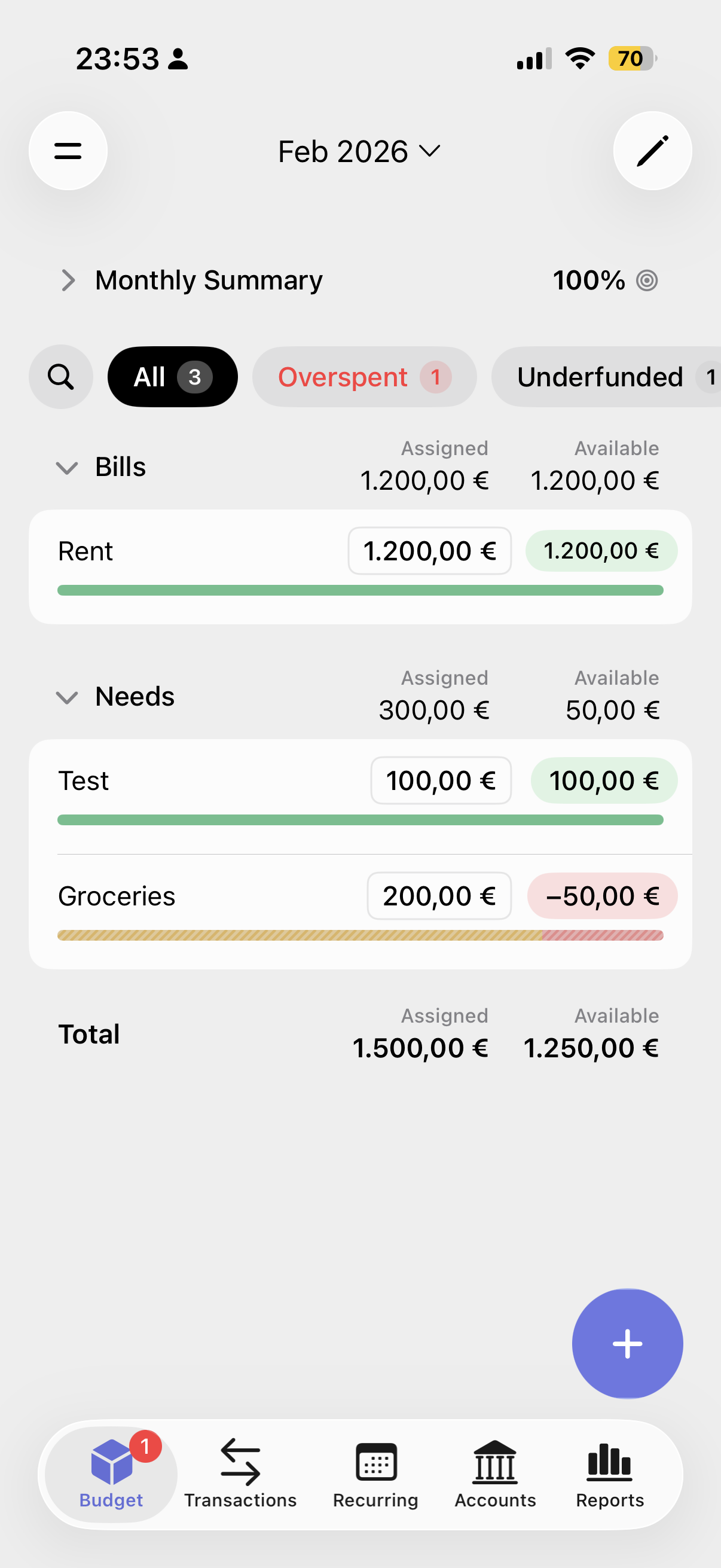
First of all congrats for the app, I’m considering to drop the current app I use ( buddy ) to yours. I do miss one thing that most apps don’t have and I think would easily added to your . Attachment as example:I’ve assigned a total of $1,500 across 3 categories.In this example, I overspent the Groceries category by $50. Currently, the app shows:
Available: $1,500 – $250 = $1,250
Groceries: turned red due to the $50 overspend
Here’s what I’d like to see:If I stayed within budget, the remaining balance at the end of the month would be $0. But because I overspent in one category, the total balance at month-end will be negative once the remaining category expenses are paid.
It would be helpful to add a second row under totals called “Impact”, showing the projected negative balance if overspending occurs in some categories. For this example, it would look like:
Assigned: $1,500
Available: $1,250
Impact: -$50
This would let me quickly see how overspending in one category affects my total budget at the end of the month.Thanks and hope this is something simple to implement, can’t wait to shift to your app!
Reviewing
Thanks! Happy to have you here 👋 If I understand you correctly, a new row somewhere at the bottom that shows how much negative you are for your categories all combined? So if you were -$50 on Groceries and -$25 on Dining Out, it would show -$75 somewhere? My first thought is you should never have a negative amount here. You need to fix it immediately. If you think about the envelope budget method, you cannot spend money that you don't have. This scenario is only possible because it is virtual money so you can go negative. If you bring this into the physical world, it is not possible that you have -$50 in your Groceries envelope (universe would break 😎). So, you need to fix this asap by taking money from a different category. Your suggestion feels like it would incentivize users to leave their categories in the negative for long periods of time. Do you feel that way? Are you trying to solve a problem that would lead you to leave these categories negative for longer than one day?